
Concussion: What to do if your child hits his head?
Usually, a bump on the head will cause pain, swelling, and possibly some bruising.
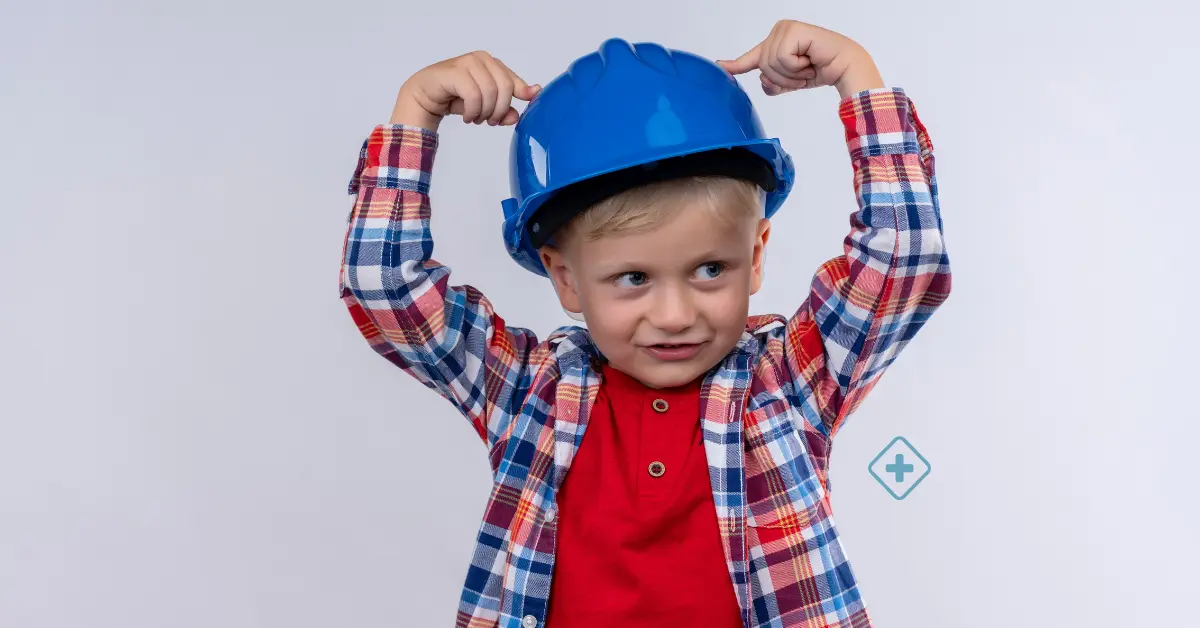
As parents, we know all too well that children can be fearless explorers, always on the move, and occasionally this leads to minor accidents like bumps on the head.
Prevention is always best, but we know that sometimes it's beyond our control and a bump can happen, so stay calm, observe the symptoms, and seek medical attention if necessary.
Although most cases are not serious, it's crucial to know how to react properly to prevent complications. So, we've prepared this guide to explain how to act.
Is Medical Attention Necessary?
The first question that arises after a bump on the head is whether medical attention is needed. The answer can vary depending on the severity of the bump and the symptoms your child exhibits.
According to research on short-distance falls in young children, only about 2% to 3% of these falls result in a simple linear skull fracture, and most of these do not lead to neurological complications.
If the bump was minor and your child shows no signs of discomfort beyond the initial pain, it may not be necessary to rush to the emergency room immediately.
How Can I Tell if the Head Bump Is Not Serious?
Usually, a bump on the head will cause pain, swelling, and possibly some bruising. These symptoms are typically normal and can be treated at home with basic care.
However, if your child exhibits any of the following warning symptoms, it is crucial to go to the emergency room without delay:
-
Loss of consciousness
-
Vomiting
-
Seizures
-
Blurred vision or other visual problems
-
Speech disorders
-
Severe headache
-
Bleeding from the nose or ears
-
Weakness or numbness in arms or legs
Signs to Go to the Emergency Room
Most head bump-related injuries in children are considered “moderate,” meaning swelling and bumps on the skin, without skull fractures or underlying brain injuries. However, cuts or lacerations may require medical attention to clean and stitch the wound.
If your child has suffered a strong blow to the head and has a wound or shows some symptoms mentioned above, stay calm and follow these steps while you can go to the doctor.
-
The first thing is to supervise them closely. They should be accompanied by an adult at all times to observe any changes in their condition. Additionally, it is important to keep them in a calm and a quiet environment to avoid stimuli that could worsen their discomfort.
-
To relieve pain and swelling, you can apply cold compresses to the affected area. This can be done with ice wrapped in a cloth or a cold gel pack. It is important not to apply ice directly to the skin to avoid frostbite.
-
It is also advisable to offer them fluids in small doses to prevent vomiting. If there is a cut or wound on the head, rinse it with clean water and apply pressure with sterile gauze to stop the bleeding. In the case of deep wounds, it may be necessary to go to the emergency room for stitches.
If your child suffers a head bump and needs urgent medical attention, we invite you to come to BlueNetHospital, where we have the best medical team ready to provide your child with the necessary care.
BlueNetHospitals
BlueNet Hospitals - Blue Net Hospitals
Trending Topics
Orthopedics and Traumatology


Trending Topics
Stroke: Symptoms, Causes & Treatment
Learn how to recognize stroke symptoms, understand its causes, and why emergency treatment can save brain function and lives.
Varicocele
Symptoms, Causes, Diagnosis, and Treatment to Protect Men's Health
Pregnancy infections (TORCH)
Risks, testing, and prevention
Anemia in Women of Reproductive Age
Symptoms, Causes, and Prevention
Health Library
Orthopedics and Traumatology
Learn more about:
- Knee Replacement
- Chronic Traumatic Encephalopathy (CTE)
- Carpal Tunnel Syndrome
- Broken Collarbone
- Osteoporosis: Symptoms, Causes, Diagnosis, and Treatment
- Hip Fracture
- Tennis elbow
- Ankle Fracture
- Sciatica: Symptoms, Causes & Treatment for Sciatic Nerve Pain
- Anterior Cruciate Ligament (ACL) Reconstruction Surgery
- Osgood-Schlatter
- Tibia Fracture
- Differences between Sprains, Strains, and Fractures
- Wrist Replacement
- Shoulder Arthroscopy: Surgery, Recovery, and Risks
- Knee Pain
- Calcaneal spur
- Wrist Ostheosynthesis
- Kyphosis or Scheuermann’s disease
- Osteoarthritis
- Hip Dysplasia
- Muscle Cramps
- Do You Need an Appointment with a Specialist?
- call us
- write us
- let's talk

