
Lumbar Laminectomy: Surgery, Risks, Recovery and Results
Learn when lumbar laminectomy is recommended, how the surgery is performed, its possible risks, and what to expect during recovery.
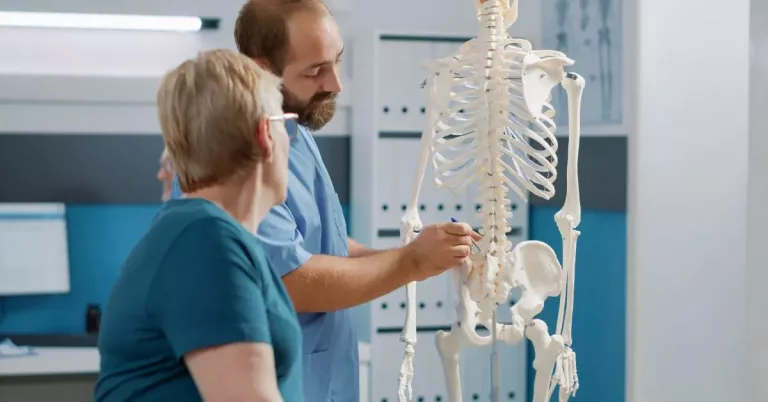
A lumbar laminectomy is a spinal decompression procedure designed to relieve pressure on the nerves in the lower back. During surgery, the neurosurgeon removes all or part of the lamina the back portion of a vertebra to create more room within the spinal canal.
This procedure is commonly used to treat symptoms caused by lumbar spinal stenosis, including pain that travels into one or both legs, numbness, weakness, and difficulty walking. Not everyone with back pain needs a laminectomy. The decision depends on the patient’s symptoms, imaging findings, neurological examination, and response to nonsurgical treatment.
When appropriately recommended, lumbar laminectomy may reduce nerve compression and improve mobility and quality of life. However, as with any spinal operation, it requires an individualized evaluation, realistic expectations, and a carefully supervised recovery.
At BlueNetHospitals Los Cabos, our Neurosurgery specialists evaluate each patient to determine whether nerve compression is present and which treatment may offer the greatest benefit.
What Is a Lumbar Laminectomy?The lumbar spine usually consists of five vertebrae, identified as L1 through L5. Inside the spine is the spinal canal, which contains the nerve roots responsible for sensation and movement in the legs, as well as bladder and bowel function.
The lamina forms part of the back wall of each vertebra. During a lumbar laminectomy, the neurosurgeon removes enough of this structure to create additional space around the compressed nerves.
Depending on the underlying problem, decompression may also include:
- Removing thickened ligaments.
- Removing bone spurs.
- Trimming a small portion of the facet joints.
- Performing a foraminotomy to enlarge the opening around a nerve root.
- Removing part of a herniated disc.
- Removing a synovial cyst or other tissue pressing on the nerves.
The exact technique depends on the location, extent, and cause of the compression.
What Is the Difference Between a Laminectomy and a Laminotomy?Although the terms are sometimes used interchangeably, they describe different procedures:
- Laminectomy: Removes a larger portion or all of the lamina at the level requiring decompression.
- Laminotomy: Creates a smaller, more localized opening in the lamina.
- Foraminotomy: Enlarges the foramen, which is the opening through which a nerve root exits the spine.
- Discectomy: Removes the part of a spinal disc that is pressing on a nerve.
The neurosurgeon selects the approach that can adequately free the nerves while preserving as much spinal stability as possible.
What Conditions Can Lumbar Laminectomy Treat?The most common reason for lumbar laminectomy is lumbar spinal stenosis, a narrowing of the spinal canal that frequently develops as a result of age-related degenerative changes.
The procedure may also form part of the treatment for:
- Enlargement of the spinal joints.
- Bone spurs.
- Thickened spinal ligaments.
- Lumbar disc herniation.
- Spondylolisthesis associated with nerve compression.
- Synovial cysts.
- Certain fractures that extend into the spinal canal.
- Selected spinal tumors or lesions.
- Cauda equina syndrome requiring urgent decompression.
These conditions are not all treated in the same way. Symptoms, neurological findings, and imaging results should correlate before surgery is recommended.
Symptoms That May Improve After Lumbar LaminectomyThe purpose of laminectomy is to relieve symptoms caused by pressure on the spinal nerves. These may include:
- Pain that travels from the lower back or buttocks into the legs.
- Tingling or numbness in one or both legs.
- A feeling of heaviness in the legs.
- Muscle weakness.
- Difficulty standing for extended periods.
- Pain, weakness, or heaviness while walking.
- Needing to sit or lean forward to feel relief.
- A progressively shorter walking distance.
Pain or leg weakness that develops while standing or walking and improves when sitting or leaning forward is known as neurogenic claudication. It is a common symptom of lumbar spinal stenosis.
Laminectomy is generally more effective at relieving radiating leg pain and improving walking ability than at eliminating pain located only in the lower back. The procedure frees the compressed nerves, but it does not reverse arthritis or every degenerative change in the spine.
When Is a Lumbar Laminectomy Recommended?Surgery is usually considered when confirmed nerve compression significantly affects daily life.
A neurosurgeon may recommend lumbar laminectomy when:
- Pain or weakness limits the ability to walk or stand.
- Symptoms have a substantial effect on quality of life.
- Progressive weakness, foot drop, or another neurological deficit develops.
- Medication, therapeutic exercise, or physical therapy has not provided sufficient relief.
- Symptoms continue to worsen.
- Imaging findings match the location and pattern of the symptoms.
- Severe nerve compression causes loss of bladder or bowel control.
Surgery does not always require a patient to complete every conservative treatment for a fixed amount of time. Progressive weakness or cauda equina syndrome may require urgent surgical care.
When Is Surgery Usually Not the First Option?A laminectomy is not generally recommended simply because an MRI shows arthritis, degeneration, or spinal narrowing. Many people have these imaging findings without significant symptoms.
It may not be the first treatment when:
- Pain is limited to the lower back without clear evidence of nerve compression.
- Symptoms are mild and do not interfere with everyday activities.
- Reasonable nonsurgical options have not yet been tried.
- Imaging findings do not explain the symptoms.
- The expected surgical risks outweigh the potential benefits.
The decision should be based on a complete clinical assessment, not on an X-ray or MRI alone.
Treatments Commonly Tried Before SurgeryWhen there is no neurological emergency, initial treatment may include:
- Temporary activity modification.
- Therapeutic exercise.
- Physical therapy.
- Strengthening the abdominal and back muscles.
- Medication selected according to the condition and medical history.
- Weight management when appropriate.
- Treatment of medical conditions that could affect recovery.
- Carefully selected spinal injections.
The safety and effectiveness of each option vary. Not everyone is a candidate for injections or certain medications, so treatment must be individualized.
How Is Lumbar Nerve Compression Diagnosed?The evaluation begins with a detailed medical history. The neurosurgeon may ask:
- Where does the pain begin, and where does it travel?
- How far can you walk before symptoms appear?
- Does the discomfort improve when you sit or lean forward?
- Have you noticed weakness, tingling, or loss of sensation?
- Have you experienced difficulty urinating or having a bowel movement?
- Which treatments have you already tried?
- Which medications and supplements do you take?
- Do you have a history of spinal surgery, osteoporosis, diabetes, smoking, or bleeding problems?
A neurological examination may assess strength, sensation, reflexes, balance, and walking.
Magnetic Resonance ImagingMagnetic resonance imaging, or MRI, is often the most useful test for viewing discs, ligaments, nerve roots, and the degree of spinal canal narrowing.
X-RaysX-rays show spinal alignment, vertebral anatomy, and possible signs of instability. Flexion and extension X-rays may be ordered to evaluate abnormal movement between vertebrae.
Computed TomographyA CT scan provides detailed images of bone and may be helpful when evaluating fractures, deformity, or patients who cannot undergo MRI.
CT MyelographyCT myelography combines contrast material within the spinal canal with CT imaging. It is reserved for specific situations, especially when MRI is contraindicated or does not provide enough information.
Imaging should be ordered when the results are likely to affect treatment. Not everyone with lower back pain requires an MRI.
Preparing for Lumbar LaminectomyBefore surgery, the medical team will review your health history, allergies, current symptoms, and medications.
Depending on your age and health, preoperative testing may include:
- Blood tests.
- An electrocardiogram.
- A chest X-ray.
- An anesthesia evaluation.
- Additional spinal imaging.
- A bone health assessment.
- Evaluation and control of diabetes, high blood pressure, or other medical conditions.
Tell your medical team if you take blood thinners, antiplatelet medications, diabetes medicine, weight-loss drugs, vitamins, herbal products, or dietary supplements. Some of these may need to be adjusted before surgery, but you should never stop them without medical instructions.
You may also be advised to:
- Stop smoking because tobacco can interfere with healing and increase surgical risks.
- Make sure chronic medical conditions are well controlled.
- Arrange for help at home during the first few days.
- Prepare loose clothing and stable footwear.
- Confirm which medicines you should take on the day of surgery.
- Follow the fasting instructions provided by the anesthesia team.
There is no single fasting schedule that applies to everyone. Instructions depend on the type of food or drink, anesthesia plan, medications, and individual health conditions. Follow the directions provided by your hospital.
How Is Lumbar Laminectomy Performed?Most lumbar laminectomies are performed under general anesthesia, although selected patients may be candidates for other anesthesia techniques.
Once anesthesia has been administered:
- The patient is positioned face down on a specialized surgical table.
- The neurosurgeon makes an incision over the affected spinal level.
- The muscles are carefully moved aside to expose the spine.
- Imaging is used to confirm the correct level.
- The necessary amount of lamina and other compressive tissue is removed.
- A foraminotomy or discectomy may be performed when needed.
- The surgeon checks that the nerve roots have adequate space.
- The tissues are returned to position, and the incision is closed with sutures or staples.
The duration varies according to the number of levels, the surgical approach, the patient’s anatomy, and whether other procedures are performed. For this reason, there is no universal operating time.
Does Laminectomy Always Require Spinal Fusion?No. Many lumbar laminectomies are performed without fusion.
Spinal fusion may be considered when there is:
- Spinal instability.
- Significant spondylolisthesis.
- Spinal deformity.
- Abnormal movement between vertebrae.
- A need to remove structures whose absence could create instability.
- A history of certain previous spinal operations.
During fusion, two or more vertebrae are joined using bone graft material and, in some cases, screws and rods. Fusion usually involves a different and often longer recovery. It should not be added routinely when there is no clear indication.
Open and Minimally Invasive Lumbar LaminectomyA laminectomy may be performed through an open or minimally invasive approach.
Minimally invasive surgery uses smaller incisions and specialized instruments to reach the spine. It may reduce muscle disruption and support a faster recovery in some patients.
However, it is not the best option for every case. The choice depends on:
- The number of affected levels.
- The location of the narrowing.
- The presence of deformity or instability.
- Previous spinal surgery.
- The experience of the surgical team.
- The patient’s anatomy and general health.
A smaller incision does not automatically guarantee a better outcome. The priority is to achieve adequate and safe decompression.
Risks of Lumbar LaminectomyLumbar laminectomy is a commonly performed procedure, but no surgery is free of risk.
Possible complications include:
- Bleeding.
- Infection.
- Blood clots.
- Reactions to anesthesia.
- Injury to a nerve root.
- Persistent pain, weakness, or numbness.
- Cerebrospinal fluid leakage caused by a tear in the dura.
- Wound-healing problems.
- Spinal instability.
- Recurrent spinal narrowing.
- A need for additional surgery.
- Persistence or worsening of symptoms.
Individual risk depends on age, overall health, the extent of surgery, smoking, diabetes, bone health, and other medical conditions.
Before deciding on surgery, ask your neurosurgeon about the expected benefits, available alternatives, and the risks most relevant to your case.
What Happens After Surgery?After the procedure, you will be taken to a recovery area. The medical team will monitor your breathing, blood pressure, leg movement, sensation, and pain level.
Many patients begin moving on the same day or the following morning. Early walking, once authorized by the team, helps restore mobility and may reduce complications associated with prolonged bed rest.
The hospital stay may range from same-day discharge to one or more nights. It depends on:
- The extent of the procedure.
- Whether spinal fusion was performed.
- Age and overall health.
- Pain control.
- The ability to walk safely.
- Any complications.
- Support available at home.
Recovery is different for every patient. Some people notice early improvement in leg pain, while numbness or weakness may take longer to resolve.
During the first few weeks, instructions may include:
- Taking short, frequent walks.
- Caring for the incision as directed.
- Taking prescribed pain medication.
- Avoiding heavy lifting.
- Avoiding repeated bending or twisting.
- Changing position frequently.
- Beginning physical therapy at the appropriate time.
- Attending follow-up appointments.
Some patients can return to office-based work after several weeks. Physically demanding jobs, driving, strenuous exercise, and heavy lifting typically require more time.
Recovery may be considerably longer when the procedure includes spinal fusion. Your neurosurgeon should approve your return to work, driving, exercise, and other activities.
Expected ResultsThe main goal of lumbar laminectomy is to relieve pressure on the nerves.
When the procedure is properly indicated, many patients experience:
- Less pain traveling into the legs.
- Improved walking ability.
- Reduced tingling.
- Improved strength.
- Greater independence in daily activities.
Complete symptom relief cannot be guaranteed. Nerves that have been compressed for a long time may not fully recover. Surgery also does not stop the aging process or eliminate every degenerative change in the spine.
Discussing which symptoms are most likely to improve can help you maintain realistic expectations.
Warning Signs After Lumbar LaminectomyContact your medical team if you develop:
- Fever.
- Redness, swelling, or drainage from the incision.
- A sudden increase in pain.
- New or progressive weakness.
- New loss of sensation.
- Pain or swelling in one leg.
- Difficulty breathing.
- Clear fluid leaking from the incision.
- New problems with urination or bowel movements.
Seek immediate medical attention if you experience loss of bladder or bowel control, urinary retention, numbness around the genitals or inner thighs, or rapidly developing weakness in both legs.
These symptoms may indicate cauda equina syndrome, a neurological emergency requiring immediate evaluation.
Am I a Candidate for Lumbar Laminectomy?You may be a candidate if neurological symptoms or difficulty walking are caused by confirmed lumbar nerve compression and nonsurgical treatment has not provided sufficient relief.
Candidacy cannot be determined from a symptom checklist or MRI alone. The neurosurgeon must consider:
- The source of the pain.
- Neurological examination findings.
- Imaging results.
- The duration and progression of symptoms.
- Previous treatments.
- Spinal stability.
- Overall health.
- Personal goals and expectations.
Bring previous imaging, a medication list, and a symptom record to your appointment. Write down when symptoms occur, how long they last, what makes them worse, and whether they interfere with walking, sleeping, working, or daily activities.
Schedule a Neurosurgery EvaluationIf lower back pain travels into your legs, walking has become difficult, or you have progressive numbness or weakness, a specialist evaluation can help determine whether your spinal nerves are compressed.
At BlueNetHospitals Los Cabos, our Neurosurgery specialists evaluate each case through a neurological examination and appropriate imaging to determine whether lumbar laminectomy or another treatment may be beneficial.
📲 Schedule an appointment with our Neurosurgery specialist via WhatsApp: +52 (624) 151 0693
This article provides general educational information and does not replace a personalized medical evaluation.
Frequently Asked Questions1. What is a lumbar laminectomy?
A lumbar laminectomy is a decompression procedure in which the neurosurgeon removes all or part of the lamina of a lumbar vertebra to create more room within the spinal canal and relieve pressure on the nerves.
2. What is lumbar laminectomy used for?It is mainly used to relieve leg pain, numbness, weakness, and walking difficulties caused by lumbar spinal stenosis or another source of nerve compression.
3. Will laminectomy eliminate lower back pain?It may improve certain symptoms, but it is primarily designed to free compressed nerves. It is usually more effective for pain radiating into the legs than for pain located only in the lower back.
4. How long does lumbar laminectomy surgery take?The duration depends on the number of levels, surgical approach, anatomy, and whether other procedures are performed. Your neurosurgeon can provide an individualized estimate after reviewing your case.
5. Is general anesthesia always used?Most lumbar laminectomies are performed under general anesthesia. Some centers may use other techniques for carefully selected patients, depending on the procedure and the person’s health.
6. Does a laminectomy require screws or spinal fusion?Not always. Fusion is usually reserved for cases involving spinal instability, significant spondylolisthesis, deformity, or another specific indication.
7. How long will I stay in the hospital?Some patients go home the same day or after one night, while others need to remain for several days. The length of stay depends on the extent of surgery, whether fusion was performed, and the patient’s recovery.
8. When can I return to work?The timing depends on the type of work and your progress. Some patients return to office work after several weeks, while physically demanding jobs require more time and medical clearance.
9. What are the main risks of lumbar laminectomy?Possible risks include infection, bleeding, blood clots, nerve injury, cerebrospinal fluid leakage, persistent symptoms, spinal instability, and the need for another operation.
10. When should I seek emergency care?Seek immediate medical attention if you develop loss of bladder or bowel control, difficulty urinating, numbness around the genital or inner-thigh area, or rapidly worsening leg weakness. These symptoms may indicate cauda equina syndrome.
Health Library
Neurosurgery





Cavernoma
A cavernoma, also known as cerebral cavernous malformation, is a congenital vascular abnormality in the brain or spinal cord.
Lower Back Pain (Lumbalgia): Symptoms, Causes & Treatment Options
Lower back pain can affect mobility, daily activities, and quality of life. Learn about the most common causes, symptoms, and treatment options for chronic and acute low back pain.
Lumbar Spinal Stenosis
Lumbar spinal stenosis occurs when there is a narrowing of the space within the spinal column.
Stroke
A stroke, is a medical condition that occurs when blood flow to the brain is suddenly interrupted.
- Do You Need an Appointment with a Specialist?
- call us
- write us
- let's talk

