
Infrared Thermometer: Correct Use, Accuracy and Safety
Learn how to measure a fever, avoid inaccurate readings, and recognize when to seek medical care in Los Cabos.
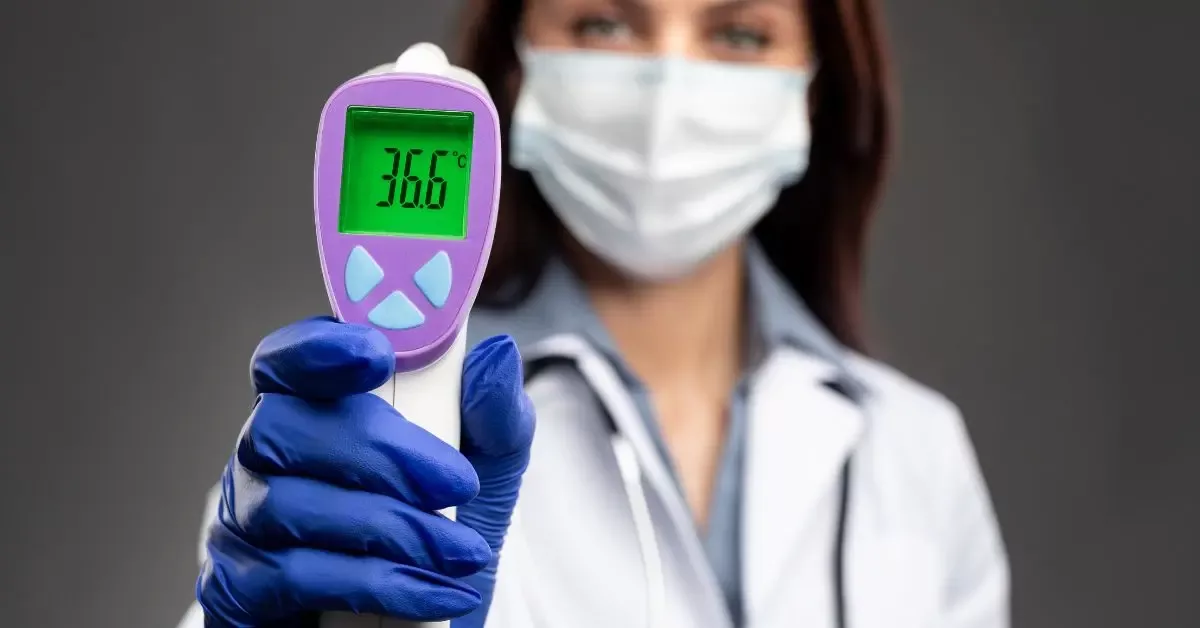
Infrared thermometers became common during the COVID-19 pandemic, but they remain useful for much more than coronavirus screening. They provide a temperature reading within seconds, are easy to clean, and do not need to touch the skin.
However, getting a reliable reading depends on the device, measurement site, distance, technique, and surrounding environment. Direct sunlight, a sweaty forehead, or incorrect positioning can significantly affect the result.
It is also important to understand what an infrared thermometer can and cannot do. It can identify a possible elevated temperature, but it cannot determine its cause. A high reading does not confirm COVID-19, influenza, or any other infection, while a normal temperature does not rule out illness.
What Is an Infrared Thermometer?A non-contact clinical infrared thermometer detects the heat naturally emitted from the surface of the skin, usually from the forehead. It then uses this information to estimate and display body temperature.
Because the device does not need to touch the person, it can be convenient at home and in clinics, hospitals, schools, and workplaces.
According to the FDA, the main benefits of non-contact infrared thermometers include:
- Fast temperature readings
- Ease of use
- Simple cleaning and disinfection
- Lower risk of cross-contamination
- Ability to repeat a measurement quickly
These benefits do not mean every device is equally accurate. It is important to select a thermometer intended for measuring human body temperature and follow the manufacturer’s instructions carefully.
Can People Buy and Use Infrared Thermometers at Home?Yes. Clinical infrared thermometers are not restricted to doctors or hospitals. Families can purchase and use them at home without a prescription.
Before buying one, make sure that:
- It is labeled for medical, clinical, or body-temperature use.
- It is appropriate for the person’s age.
- It has a clearly identified manufacturer.
- It includes instructions, a warranty, and customer support.
- The recommended measurement site is clearly stated.
- It has the appropriate authorization from the relevant health authority.
- It includes a body mode if it also measures objects or surfaces.
Avoid industrial infrared thermometers, even when they resemble medical forehead thermometers. Industrial devices are designed to measure machinery, food, surfaces, or other objects and are not appropriate for determining body temperature.
Can an Infrared Thermometer Detect COVID-19?No. An infrared thermometer can detect a possible elevated temperature, but it cannot identify the cause.
Fever can be associated with many conditions, including:
- COVID-19
- Influenza
- Respiratory syncytial virus
- Ear or throat infections
- Urinary tract infections
- Gastroenteritis
- Pneumonia
- Other viral or bacterial infections
- Noninfectious inflammatory conditions
Some people with COVID-19 never develop a fever. They may have a cough, fatigue, headache, muscle pain, congestion, gastrointestinal symptoms, or no symptoms at all.
Evidence collected during the pandemic showed that temperature screening alone detected few COVID-19 cases. An infected person may not have a fever or may transmit the virus before symptoms begin.
When a respiratory infection is suspected, temperature should be considered together with symptoms, exposure history, and, when appropriate, diagnostic testing and medical evaluation.
Are Infrared Thermometers Safe?Yes, provided that the device is designed for clinical use and is operated according to its instructions.
These thermometers detect infrared energy naturally emitted by the skin as heat. They do not send dangerous radiation into the body, reach the brain, or damage the retina when correctly aimed at the forehead.
During the pandemic, misleading messages claimed that infrared thermometers could damage the eyes or nervous system. These claims often confused clinical thermometers with certain industrial devices.
Some industrial thermometers include a laser pointer to identify the target area. These products are not intended for measuring body temperature and should never be pointed toward anyone’s eyes.
Before using a thermometer, confirm that it:
- Is intended for human body-temperature measurement
- Is appropriate for the user’s age
- Has clear operating instructions
- Is set to body mode
- Has not been damaged
- Is not an industrial temperature gun
Normal body temperature is not exactly the same for everyone. It can change according to age, time of day, physical activity, menstrual cycle, and the measurement site.
Although 98.6°F or 37°C is often cited as normal, the FDA notes that normal body temperature can fall within a range of approximately 97°F to 99°F, or 36.1°C to 37.2°C.
The method also matters. A forehead reading may not be identical to an oral, underarm, ear, or rectal temperature.
A temperature of 100.4°F or 38°C is often used as a general fever threshold, but its clinical significance depends on the person’s age, measurement site, symptoms, and medical history.
Do not focus only on the number. Someone experiencing difficulty breathing, confusion, severe weakness, or rapid deterioration needs medical attention even if the temperature is not particularly high.
Should Temperature Be Measured on the Forehead, Wrist, or Arm?Use the measurement site specified by the manufacturer.
Most clinical non-contact infrared thermometers are designed and calibrated for the forehead. If that is the case, using the wrist or arm may produce a different result and could cause a fever to be missed.
Skin temperature on the arms and wrists can change more easily because of air conditioning, outdoor weather, circulation, and environmental exposure. Measurement sites should not be changed simply for convenience.
When using a forehead thermometer:
- Remove hats, headbands, scarves, and hair from the area.
- Make sure the forehead is clean and dry.
- Position the sensor in front of the recommended area.
- Hold the device perpendicular to the forehead.
- Follow the distance specified by the manufacturer.
- Ask the person to remain still.
Only use the wrist if the manufacturer specifically states that the device has been designed and validated for that location.
How to Use an Infrared Thermometer Correctly1. Read the instructions
Every model may have a different operating distance, setup, and adjustment time. Confirm that the device is in body mode rather than object or surface mode.
2. Prepare the environmentUse the thermometer indoors, away from direct sunlight, drafts, and strong heat sources. The FDA notes that many devices are designed for environments between 60.8°F and 104°F, or 16°C and 40°C, with relative humidity below 85%. The manufacturer’s specifications should always take priority.
3. Allow the device to adjustIf the thermometer was stored in a hot car, cold room, or another environment with a very different temperature, leave it in the room where it will be used for 10 to 30 minutes.
This allows the device to adjust to the surrounding temperature.
4. Prepare the personWait before taking a reading if the person has just:
- Exercised
- Taken a shower or bath
- Been outside in direct sunlight
- Entered from a very hot or cold environment
- Used a hot or cold compress
- Worn a tight hat or headband
The forehead should be clean, dry, and uncovered. Sweat may cool the skin and produce an artificially low reading.
5. Follow the correct distance and positionHold the sensor perpendicular to the forehead at the distance indicated in the instructions. Do not assume every thermometer should be held at the same distance.
Some models work within one or two centimeters, while others require a different separation.
6. Repeat an unexpected measurementIf the result appears unusually high or low, wait briefly and repeat the measurement. If the reading still does not match the person’s condition, confirm it with another appropriate method or request medical advice.
Common Causes of Inaccurate ReadingsAn infrared thermometer may produce an inaccurate result when:
- It is used in direct sunlight.
- The measurement is taken outdoors.
- It is held too close or too far away.
- It is pointed at an angle.
- Hair, sweat, or cosmetics cover the measurement area.
- The person has just exercised.
- The sensor is dirty or wet.
- The device has not adjusted to the room.
- It is set to object mode.
- The wrist is used with a forehead-only device.
- The person moves during the measurement.
- An industrial thermometer is used instead of a clinical model.
Always follow the manufacturer’s cleaning instructions. Most infrared thermometers should not be immersed in water, alcohol, or other liquids.
To keep the device working properly:
- Keep the sensor clean and dry.
- Avoid touching the inside of the sensor.
- Use only approved cleaning products.
- Do not spray liquid directly onto the device.
- Store it in a dry, protected place.
- Check the batteries if readings become inconsistent.
- Protect it from falls and impacts.
- Replace or inspect the device if it repeatedly produces unreliable results.
An infrared reading can be useful as an initial measurement. Consider repeating or confirming it when:
- The person appears ill, but the reading is normal.
- Results vary significantly between measurements.
- The forehead is sweaty.
- The device was exposed to heat or cold.
- The result will influence an important medical decision.
- The person is a young infant.
- The patient is immunocompromised or has a serious chronic condition.
The best confirmation method depends on age. Not every measurement site offers the same reliability in infants and young children.
When Should You Seek Medical Care?The thermometer reading is only one part of the assessment. Seek urgent medical attention if the person has:
- Difficulty breathing
- Confusion or disorientation
- Extreme drowsiness or difficulty waking
- A seizure
- Neck stiffness
- A severe headache
- Blue or gray lips or fingernails
- Persistent chest pain or pressure
- Signs of dehydration
- Persistent vomiting
- A rapidly developing rash
- Rapid deterioration
A baby younger than three months with a temperature of 100.4°F or 38°C or higher needs immediate medical evaluation, even if the baby otherwise appears well. Children who are immunocompromised or have conditions that increase their risk of complications may also need earlier medical attention.
Adults should consult a healthcare professional if the fever is very high, persists for several days, worsens, or occurs with concerning symptoms. Pregnant people and patients with weakened immune systems or chronic conditions should seek guidance sooner.
Medical Care in Los CabosThe climate in Los Cabos can affect forehead temperature readings. Moving directly from outdoor heat into an air-conditioned room may temporarily alter skin temperature.
Before using an infrared thermometer, allow both the person and the device to adjust to the indoor environment.
If the reading is abnormal or symptoms include difficulty breathing, severe weakness, chest pain, or dehydration, do not rely on the thermometer alone. A medical evaluation can help determine the cause and whether testing or treatment is necessary.
Schedule a Medical Appointment in Los CabosDo you have a persistent fever or questions about a temperature reading? Our General Medicine specialists can evaluate your symptoms and recommend the appropriate tests or treatment.
Schedule an appointment with our specialists in Los Cabos via WhatsApp:
📲 +52 (624) 151 0693
If you experience difficulty breathing, confusion, seizures, severe chest pain, or rapid deterioration, go directly to the Emergency Department.
Frequently Asked Questions1. Can I buy an infrared thermometer for home use?
Yes. Clinical infrared thermometers are available for home use and do not require a prescription. Choose a device intended for measuring human body temperature and follow its instructions carefully.
2. Can an infrared thermometer damage the eyes?A clinical non-contact thermometer does not damage the eyes or retina when used correctly. Do not use industrial devices and never point a laser toward the eyes.
3. Does an infrared thermometer emit radiation?It detects the infrared energy naturally emitted by the skin as heat. It does not send dangerous radiation into the body.
4. Can it determine whether someone has COVID-19?No. It only estimates body temperature. A person with COVID-19 may not have a fever, while an elevated temperature can have many other causes.
5. Is it better to measure on the forehead or wrist?It depends on the device, but most clinical infrared thermometers are designed for the forehead. Do not use the wrist unless the manufacturer specifically authorizes it.
6. Why does the thermometer show different readings?Distance, angle, sweat, room temperature, sensor cleanliness, and movement can change the result. Review the instructions and repeat the measurement under appropriate conditions.
7. How long should the thermometer adjust to the room?Many devices need approximately 10 to 30 minutes. Check the instructions for the specific model.
8. Can I clean it with alcohol?Only if the manufacturer permits it. Do not immerse the device or spray liquid directly onto the sensor.
9. Does a normal temperature rule out an infection?No. Some infections occur without fever or may still be in an early stage. Symptoms and the person’s overall condition must also be considered.
10. When is a temperature considered a fever?A temperature of 100.4°F or 38°C is commonly used as a general reference, but the threshold depends on age and the measurement site. A baby younger than three months with a temperature of 100.4°F or higher needs immediate medical evaluation.
11. When should I go to the Emergency Department?Seek immediate care for difficulty breathing, seizures, confusion, fainting, neck stiffness, severe chest pain, dehydration, or rapid deterioration.





Trending Topics
Stroke: Symptoms, Causes & Treatment
Learn how to recognize stroke symptoms, understand its causes, and why emergency treatment can save brain function and lives.
Varicocele
Symptoms, Causes, Diagnosis, and Treatment to Protect Men's Health
Pregnancy infections (TORCH)
Risks, testing, and prevention
Anemia in Women of Reproductive Age
Symptoms, Causes, and Prevention
Health Library
General Medicine
- Do You Need an Appointment with a Specialist?
- call us
- write us
- let's talk

